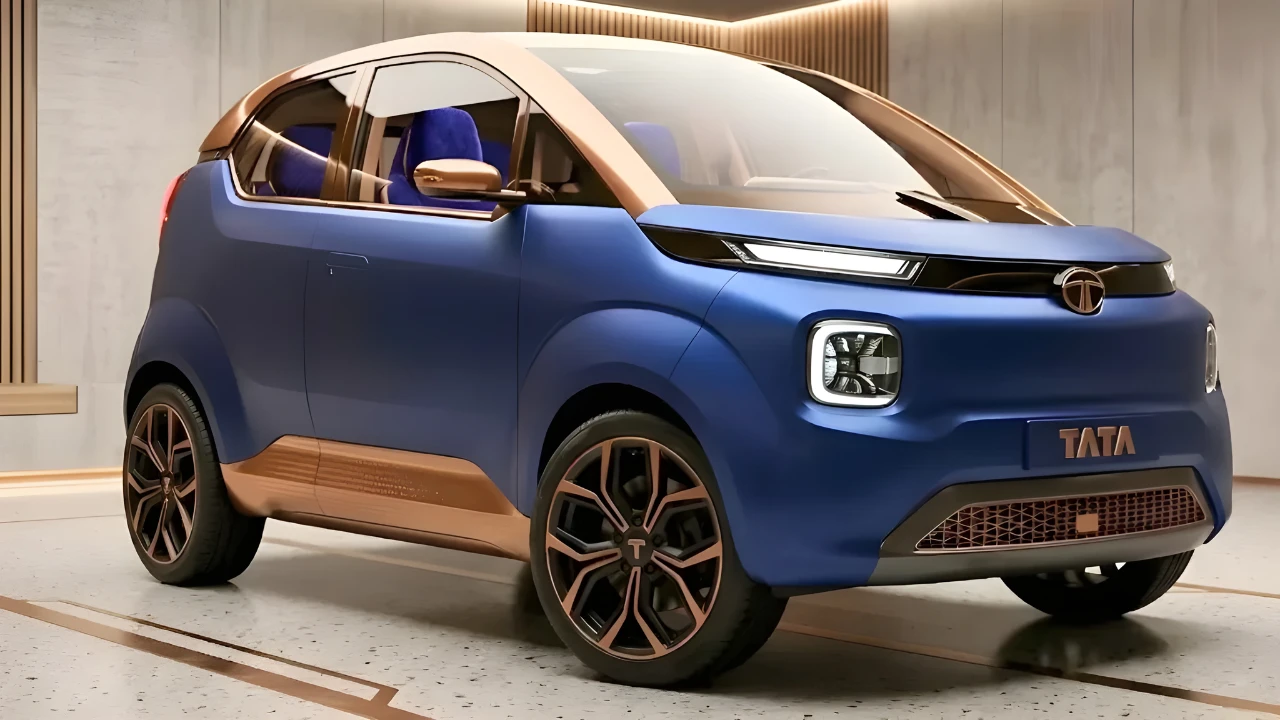
The Tata Nano EV 2026 could prove to be a potential game-changer in India’s affordable electric mobility segment. This small urban electric vehicle targets budget-conscious buyers, first-time car owners, and city commuters seeking an affordable mode of transportation. The Nano EV addresses the growing demand for affordable, zero-emission vehicles in densely populated urban markets. It positions itself as an entry-level electric car, specifically designed with India’s driving conditions and customer preferences in mind.
Motor and Performance
The Tata Nano EV 2026 is equipped with a small electric motor that delivers approximately 30 kW of power—sufficient for urban driving requirements. Its powertrain generates the necessary torque for city driving and navigating through traffic. Its top speed reaches approximately 80–90 km/h, which is perfectly suited for urban speed limits and short-distance travel needs. True to the nature of electric vehicles, the motor offers instant acceleration, making it easier to overtake other vehicles and change lanes in congested traffic.

Battery and Charging
On a single full charge, the Nano EV offers a practical driving range of approximately 150–200 kilometers, which is adequate for daily city commuting. Its battery capacity stands at around 15–20 kWh, striking the right balance between range requirements and the objective of affordability. Charging it via a standard home outlet takes 4–6 hours, while fast-charging capabilities significantly reduce the waiting time. Its energy consumption is remarkably low, resulting in a per-kilometer running cost that is substantially lower than that of petrol or diesel-powered vehicles.
Dimensions and Utility
The exterior dimensions of the Tata Nano EV 2026 are small and compact; It measures approximately 3100 mm in length, 1500 mm in width, and 1600 mm in height. Its wheelbase stands at roughly 2200 mm, allowing for optimal utilization of interior cabin space while making it easy to maneuver and park in congested urban environments. The ground clearance of 165–170 mm is adequate for the typical road conditions encountered in India. The vehicle comfortably accommodates four passengers, and its boot offers a storage capacity of 110–150 liters—sufficient for carrying daily groceries and essential items.

Variants and Trims
The Nano EV lineup comprises two primary variants, designed to cater to a diverse range of customer needs and budgets. The base variant provides essential features and standard equipment for price-conscious buyers. The top-spec variant includes additional comfort-enhancing features, advanced connectivity options, and premium interior appointments. While the core specifications of the electric powertrain remain consistent across both variants, they differ in terms of feature packages, seat upholstery quality, and technological integration to suit varying customer preferences.
Safety and Technology
The Tata Nano EV 2026 incorporates fundamental safety features, including dual front airbags, ABS with EBD, rear parking sensors, and a speed alert system. Structurally, the vehicle utilizes high-strength steel in strategic areas to ensure enhanced crash protection. In terms of technology, it features a touchscreen infotainment system with smartphone connectivity, as well as a digital instrument cluster that displays real-time information regarding battery status and driving range. Regenerative braking technology further enhances efficiency while providing additional stopping power, thereby significantly extending the lifespan of the braking components.

Features and Comfort
Its interior features include fabric upholstery, manual air conditioning, power windows, and central locking across all variants. The cabin layout has been designed to maximize space utilization, ensuring ample headroom and legroom for occupants. Basic controls for audio and telephony functions are conveniently integrated into the steering wheel. Strategically placed storage compartments throughout the cabin prove highly practical for stowing small items and personal belongings. The seating arrangement strikes a fine balance between comfort and the vehicle’s compact dimensions, making urban commutes a pleasant and less fatiguing experience for both drivers and passengers.
Pricing and Ownership
The Tata Nano EV 2026 is expected to be priced between ₹6 lakh and ₹8 lakh, positioning it as one of the most affordable electric car options in India. Thanks to government subsidies and state-level incentives, the effective purchase price—depending on the specific location—could be reduced by as much as ₹1 lakh to ₹1.5 lakh. Compared to conventional vehicles, maintenance costs remain significantly lower due to the presence of fewer moving parts. The battery typically comes with a warranty covering up to 8 years or 120,000 kilometers. Given the vehicle’s price point and modest power output, its insurance premiums also remain at a moderate level.
Final Words
In India’s constantly evolving automotive landscape, the Tata Nano EV emerges as a practical solution for affordable urban electric mobility. Its compact size, adequate performance capabilities, and economical ownership proposition make it well-suited for city-centric transportation needs. With a reasonable range, essential safety features, and a competitive pricing structure, this vehicle effectively addresses the requirements of the entry-level electric car segment. The Nano EV represents a significant step toward popularizing electric vehicles among budget-conscious Indian consumers who are seeking sustainable and affordable daily transportation without compromising on basic standards of comfort and reliability.

 Join WhatsApp